
You can find more information about other types of services, as well as reviews of Hostinger.com, in the following articles.

Objective expert review Hostinger.com
Hostinger vs DreamHost
Which Giant of the Hosting World Comes Out on Top in 2026?
If you have ever been in the position where you needed to shop around for a web hosting provider for your next online project, you will know that this task can be a daunting one, and that is putting it mildly. Everyone promises incredible speed and the most reliable servers ever, not to mention that their support is superior to anyone else’s, but as with most things in life, it is the real-world experience that counts. In this review I will be matching two very established hosting providers up against each other, Hostinger and DreamHost, both household names when it comes to hosting. I will look at their pricing, performance, how easy their platforms are to use, and more, to hopefully help you decide which provider is right for you, the end user. So let’s start by looking at what they offer.
Who Offers What:
Both of these providers are very well-known as trusted and reliable hosting providers. They both offer shared hosting, dedicated WordPress hosting, VPS servers, email solutions, domain registrations, an AI website builder, and cloud hosting, but there are some services that differs to what the other one offers:
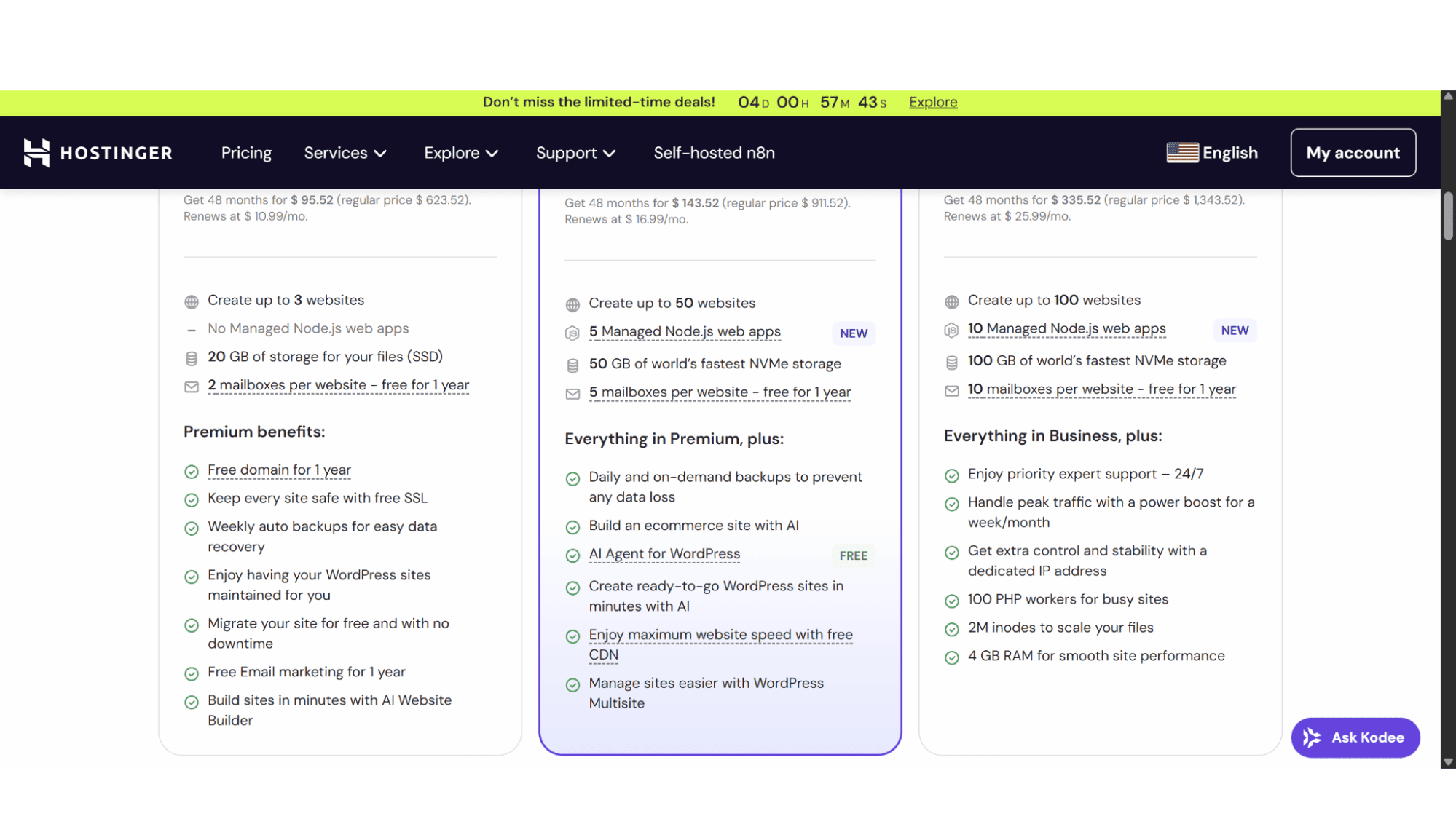
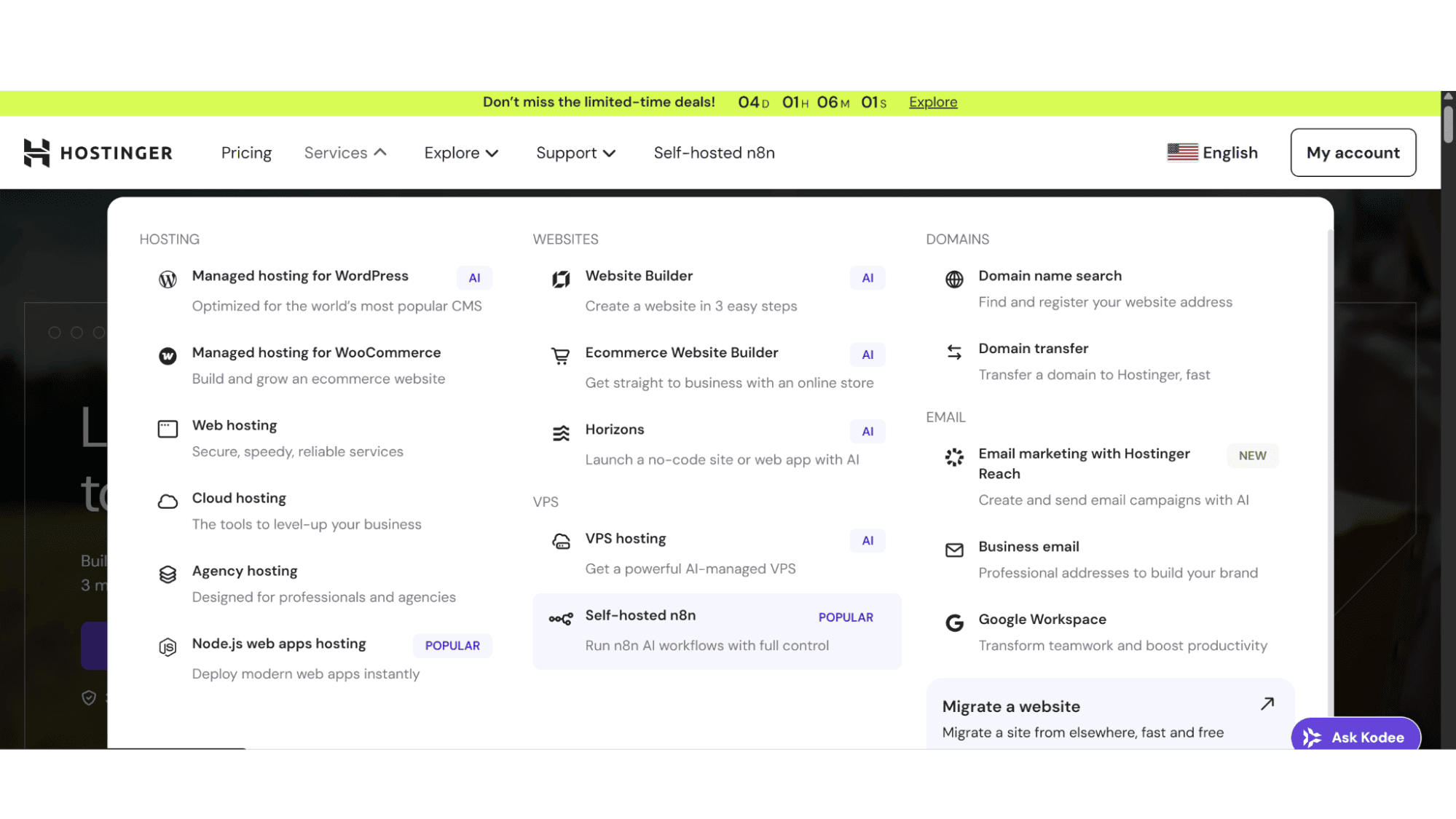
Hostinger’s services also included “node.js web apps hosting”, which allows you to deploy React, Next.js, Vite, and other web apps in minutes, as well as “n8n hosting”, a very popular, open-source workflow automation tool that allows you to connect all your apps and data in one, easy-to-use place, without needing to write a single line of code.
DreamHost doesn’t offer these services, however, they have dedicated servers and “DreamObjects”, a type of storage solution, as part of their offers. Furthermore, they also offer website design and development services, marketing solutions, Bunny CDN, a fast, budget, and developer-friendly Content Delivery Network (CDN).
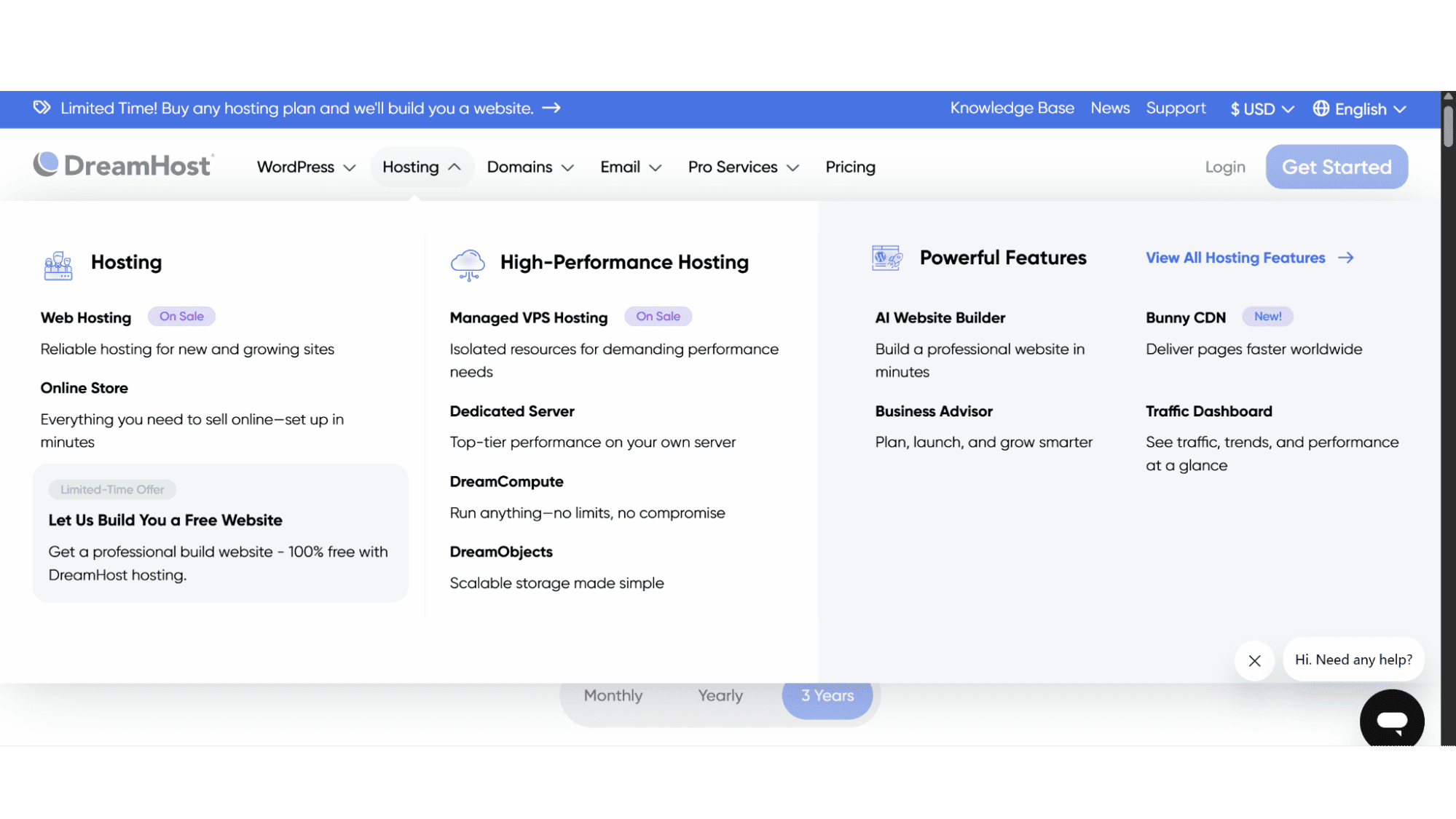
You can’t go wrong with any one of the two, but in my opinion DreamHost offers just that little bit more. So in terms of services offered, I would go with DreamHost.
The Battle of the Dashboards
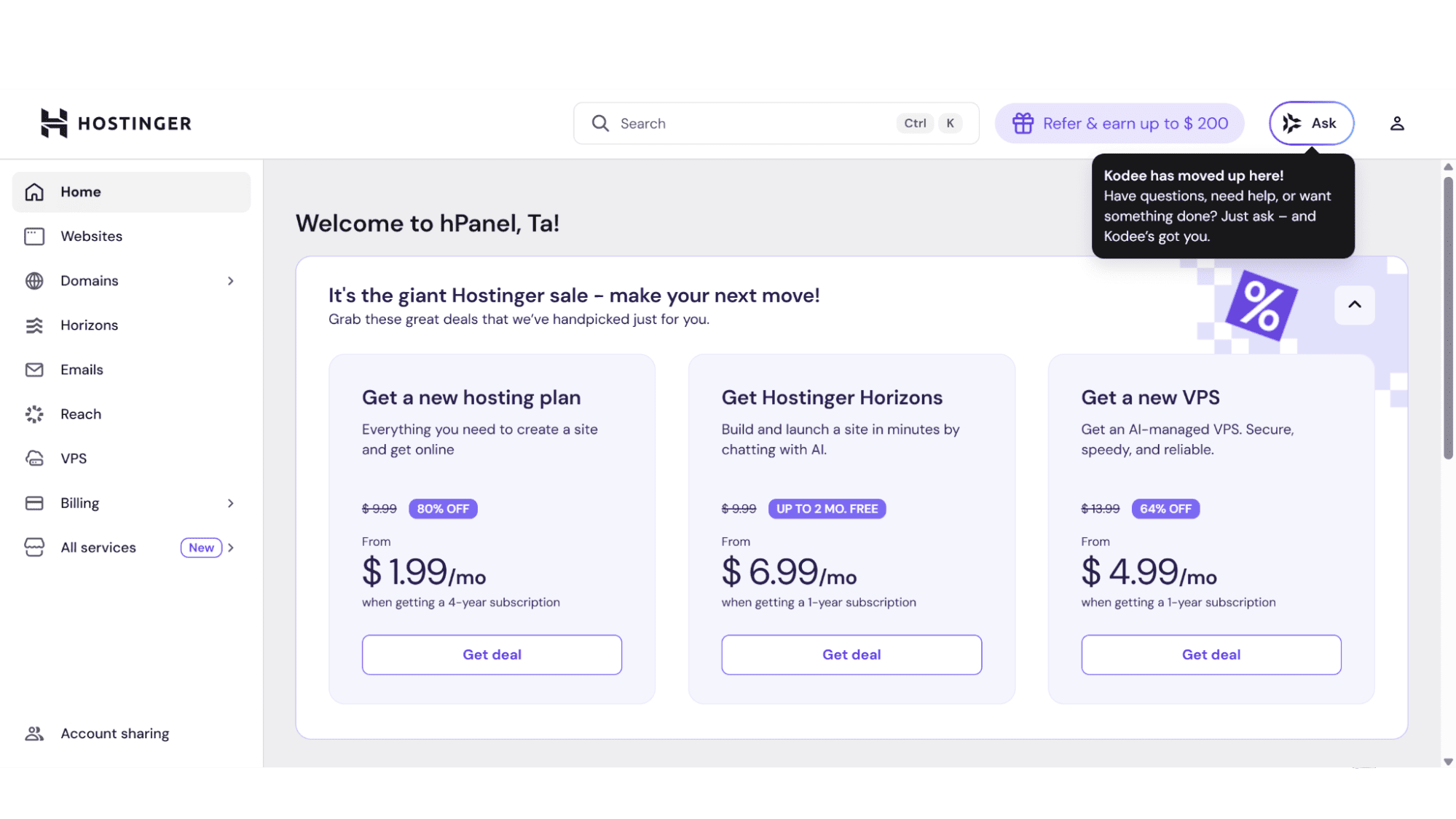
I knew I'd like Hostinger the second I logged in. They include their very own, custom designed control panel, the hPanel, with all their hosting plans, and this isn't just some clunky old control panel. This panel actually feels like it was designed for users that’s not tech experts. It is clean, easy to use, and all tabs are easy to find. With this panel you can easily manage all aspects of your website of hosting space, domains, as well as emails, and tasks like installing WordPress or managing backups are rarely more than a few clicks away. Everything loads instantly and feels like it's working with you. It takes the headache out of site management.
DreamHost feels different. Their custom dashboard is clean and works well, but honestly, it feels more like a tool for a seasoned users that knows their way around hosting plans and features. I sometimes have to hunt through menus to find what I need, like the backup settings. That said, it's powerful and gives you a lot of control, it's maybe just not as immediately welcoming if you're just starting out. For someone who just wants to publish a site without a learning curve, Hostinger’s interface is a significant advantage.
In terms of dashboards, Hostinger comes out on top in my opinion, simply because of the ease of use.
Raw Performance & Speed
The Numbers Don't Lie
Performance is non-negotiable – period! Everyone knows that a slow site frustrates users and spoil the whole experience, it damages your SEO rankings that you have worked so hard to get, and kills conversions dead in their tracks. I have done quit some research on the internet of what users, and some reputable tech publications have to say about the performance these two offer, and there seems to be a stark contrast between these two providers.
If one looks at Hostinger’s entry level plan you will notice that although it runs on fast SSD drives, it is, however, not NVMe drives which are up to 20x faster. It also doesn’t include a CDN feature. So, if you are after performance you will need to look at their higher tier options that will include both NVMe disk drives and Hostinger’s very own content delivery network. They also offer server locations that include multiple data centers across Europe, Asia, North America, and South America to ensure you are as close to your target audience as possible. The speed one gets on the higher tier plans are exceptional. From multiple independent tests in real-world situations, Hostinger consistently delivered blazing-fast GTmetrix results. We’re talking about full page loads in under 800 milliseconds, with the main content becoming visible (Largest Contentful Paint) in an impressive 408ms – this is an average taken over multiple tests, so it will differ from site to site. These numbers aren't just good; they are really great for shared hosting and indicate a highly optimized server stack, likely benefiting from their use of NVMe storage across most of their plans, which is significantly faster than traditional SSDs you find on their entry-level options.
DreamHost on the other hand offer standard web hosting plans, which runs on SSD drives and shared resources, as well as High-Performance web hosting, which runs on blazing-fast NVMe disk drives and they also offer a variety of global data center locations. But, with their plans there’s a noticeable lack of a CDN feature, as it doesn’t come standard with their plans. They do offer it for an additional monthly fee though. Independent test for them show that they are slightly lagging behind in comparative analysis, as tests on similar setups showed full load times stretching up to 3.4 seconds, with the main content taking 2.6 seconds to appear. So while they are not "slow" by any means, in a direct comparison, the difference is there. For content-rich sites, blogs aiming for high engagement, or small business sites where every second counts, Hostinger’s performance edge is a major deciding factor.
Customer Support
AI Assistants vs. Real Support Agents
When things go wrong, and sooner or later they eventually do for pretty much everyone, or you simply have a question to ask, you want support that is ready to help. The user experience with these two providers work on different methods.
Hostinger has some of the best support teams I have dealt with over the years, there’s multiple channels and all of them are really fast to respond. Their support structure starts with their very own AI assistant, Kodee, which will answer questions and give solutions to most of the common problems one might encounter. But if you are like me and prefer to chat to a real person, you can simply ask to be transferred to a human agent. For more technical issues, users will need to log support tickets in the user dashboard, and they also offer a very comprehensive knowledgebase on their website, as well as tutorials. During my testing, I got a response from one of their friendly agents within 30 seconds every single time. Excellent support that I can’t fault at all.
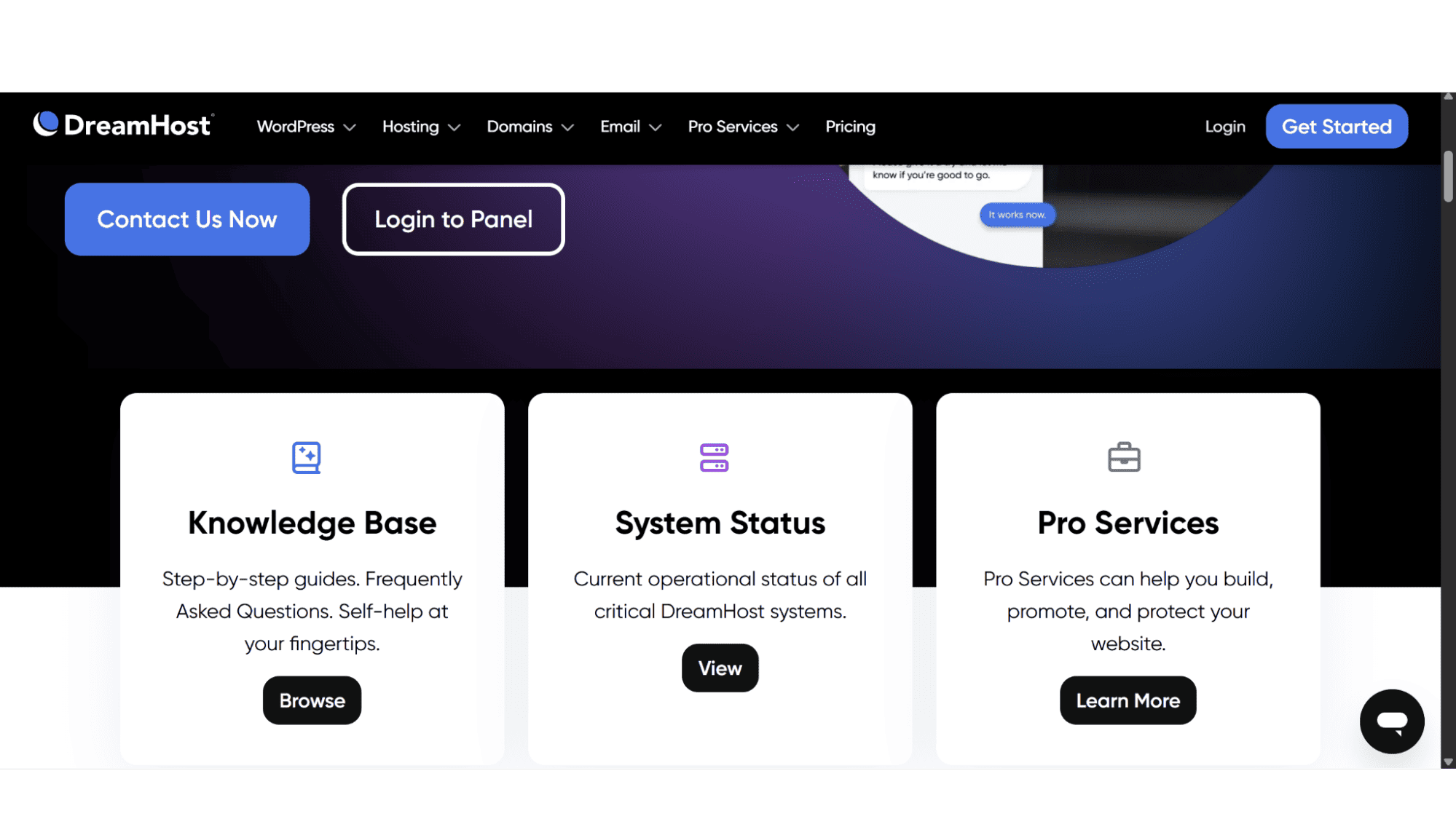
DreamHost's support structure unfortunately has some notable gaps. When you get stuck you can reach their support agents via email, tickets, and there is also a decent knowledgeable base and community forum on their website. However, their live chat availability can be inconsistent, for me at least. In my testing I found the live chat to be closed on two occasions, leaving me to submit a ticket instead and then wait for a response. For urgent issues or users who prefer real-time conversation, this lack of guaranteed instant access can be a significant frustration and a point where Hostinger clearly pulls ahead.
The Features & Value You Get:
These two providers aren’t so popular and successful for now reason, and both hosts bundle solid features with all their plans, but the depth and what’s included free of charge differs.
Hostinger for one includes incredible value into their affordable entry-level plans. Even on the most basic plan they usually include daily backups, a free SSL certificate from Let’s Encrypt, a free domain for the first year, as well as their AI website builder. One feature that stands out for me personally, mainly because I work with WordPress sites on a daily basis, is the WordPress staging site that comes standard with all plans. All plans except their most basic plan also run on super-fast NVMe drives and you get access to their CDN network. Their free site migration service is also notably hands-off, often handled directly by their team.
DreamHost is generous in its own right, and they have a strong focus on simplicity and no upsells – something most people these days would appreciate. They proudly offer unlimited bandwidth on most plans, include email hosting (except on the bare-bones starter tier), and provide a free SSL certificate for the life of your site. Just like Hostinger they also offer a 30-day money back guarantee, which seems to be the standard period providers offer. However, CDN will cost you extra per month as it is a separate product, and unlike Hostinger that includes staging sites with their plans, with DreamHost it is reserved only for their premium WordPress plans (DreamPress).
My Verdict
Which Type of User Should Choose Which Host?
In my opinion, this isn't a one-size-fits-all choice. The right choice depends on what your specific needs are.
I would say choose Hostinger if:
- Speed is your top priority, and you need the fastest possible loading times for your SEO and user experience. DreamHost isn’t bad, don’t get me wrong, but I think Hostinger beats them with speed.
- You are a total beginner or need the most user-friendly host possible. Their hPanel dashboard and streamlined processes makes managing all aspects of your hosting space a breeze.
- You want the best value on a tight budget. Their long-term plans offer more high-performance features (NVMe, daily backups, AI tools) for less money.
- You need excellent and reliable support that is available around the clock.
I would say choose DreamHost if:
- If you are after long-term commitment flexibility and a robust infrastructure guarantee.
- You simply need a basic, no-frills hosting plan with a strong reputation for stability and uptime.
- Your project needs unlimited resources like bandwidth and email accounts and don’t mind paying a bit more for their mid-tier plans and up.
- You don’t mind getting customer support mainly via email and support tickets. As mentioned before their live chat wasn’t always available during my tests, but it could very well be an isolated incident.
My Final Thoughts: In a direct, feature-for-feature comparison for the majority of users, particularly for beginners, bloggers, and small businesses, Hostinger is an excellent option in 2026. It wins on the critical fronts of raw performance, user experience, and responsive support, all while offering aggressive pricing. DreamHost remains a trustworthy and principled provider with fantastic policies, but its slower speeds and less accessible live support make it harder to recommend as the top choice for performance-conscious users today. Your website's foundation is crucial, choose the host that aligns not just with your budget, but with your goals for growth and user satisfaction.