CDN Service Providers
CDN (content delivery network) is a network of servers located all over the world linked together to deliver content as quickly as possible. To minimize the distance between the visitors and your website’s server, a CDN stores a cached version of its content on all of these servers. You can find more details about CDN’s pros and cons below. In this...


1
We recommend

AccuWebHosting was founded in New Jersey in 2003. It provides reliable hosting. Has more than 101 025 customers around the world. ...

2

Cloudflare started as a simple application to find the source of email spam. From there it grew into a service that protects websi...

3
The support level is rather good and the server characteristics are excellent. Also, 1&1 provides a lot of security features f...

4
Kualo is a hosting company from the United Kingdom that has been providing hosting services for over two decades, since 2000. Kual...

5
Fastly’s powerful and programmable edge cloud platform helps the world’s top brands deliver the fastest online experiences possibl...

6
The CDN performance is great and the pricing seems reasonable mostly. The image optimization is by far the best around for the pri...

7
We recommend
Hostinger runs promos oftentimes, so you can get a nice package at a very discounted price. Also, these guys treat hosting securit...

8

The company was founded in 2012 and specializes in cloud hosting. Their website is easy to understand, and you can easily decide w...

9
PrivateAlps is a Switzerland-based “offshore” hosting provider focused on privacy and security. It offers services like web hostin...

10

KeyCDN is a registered trademark and service of proinity LLC, a privately funded company headquartered in Switzerland. They are a ...

11
Cloud.Google was founded in 2011 in the USA. Google.Cloud offers comprehensive infrastructure services from cloud computing to IoT...

12
The company was established in 2006 in the USA. Their servers are located in the USA, Canada, China. Amazon AWS is a very big clou...
FAQ
?
❓ Why do people use CDN?People use CDN, or content delivery network, for a variety of reasons, including:
1. Improved Website Performance: By distributing content across multiple servers, CDNs can reduce the amount of time it takes for content to load on a website. This can improve website performance, user experience, and overall site speed.
2. Global Availability: CDNs have servers located in various geographic locations around the world, which makes it possible to distribute content to users in any location, regardless of their distance from the server.
3. Scalability: As website traffic increases, CDNs can help to manage the load by distributing content to multiple servers, ensuring that the website remains available and responsive to users.
4. Reducing Server Load: By using a CDN, a website can reduce the load on its own servers by offloading the delivery of content to the CDN's servers.
5. Security: CDNs can provide additional security measures such as SSL certificates, DDoS protection, and firewalls, to protect websites and content from malicious attacks.
Overall, using a CDN can help improve website performance, availability, scalability, and security.?
💻 Is CDN the same as cloud hosting?No, CDN (Content Delivery Network) and cloud are not the same thing, although they are often used together.
A CDN is a network of servers located in different parts of the world that work together to deliver content (such as images, videos, or web pages) to users. The goal of a CDN is to improve the performance and reliability of content delivery, by caching content closer to users and reducing the distance that data needs to travel. CDNs are often used to speed up the delivery of web content to users, by serving content from the server that is physically closest to the user.
On the other hand, cloud computing refers to the use of remote servers (often owned by a third-party provider) to store, manage, and process data over the internet. Cloud computing enables users to access powerful computing resources, such as servers, storage, databases, and software applications, without having to invest in and maintain their own hardware and infrastructure.
While a CDN is a specific technology used for content delivery, cloud computing is a broader concept that encompasses many different services and technologies. That being said, CDNs are often hosted on cloud infrastructure, and many cloud providers offer CDN services as part of their overall offering.
Market analysis (Price)
| Minimum | Average value | Maximum | |
|---|---|---|---|
| Hosting | undefined NaN /year | undefined NaN /year | undefined NaN /year |
| VPS/VDS | undefined NaN /year | undefined NaN /year | undefined NaN /year |
| Server | undefined NaN /year | undefined NaN /year | undefined NaN /year |
Market analysis (Disk Space)
| Minimum | Average value | Maximum | |
|---|---|---|---|
| Hosting | 0.30 Gb | 77.19 Gb | 350.00 Gb |
| VPS/VDS | 10.00 Gb | 114.17 Gb | 400.00 Gb |
| Server | 50.00 Gb | 2055.80 Gb | 8000.00 Gb |
Market analysis (CPU Cores)
| Minimum | Average value | Maximum | |
|---|---|---|---|
| VPS/VDS | 1.00 pcs | 2.42 pcs | 6.00 pcs |
| Server | 2.00 pcs | 8.41 pcs | 24.00 pcs |
Market analysis (Memory (RAM))
| Minimum | Average value | Maximum | |
|---|---|---|---|
| VPS/VDS | 1.00 Gb | 5.67 Gb | 16.00 Gb |
| Server | 4.00 Gb | 70.67 Gb | 256.00 Gb |
The Best CDN Service Providers in 2026
Here Are My Picks for the Top 3 CDN Service Providers That Are Worth Their Weight in Gold in 2026
In a world where milliseconds can mean the difference between a user being your product, or signing up for your services, rather than with a competitor, a CDN (content delivery network) is more important than ever. Most people however aren’t even familiar with the term or know what it is – well, let me start by explaining what it is and does.
A Content Delivery Network, or CDN for short, is basically a global network of servers that are, in most cases, scattered around the world and that work together to deliver your website's content such as images, videos, CSS files, and scripts – files that are normally a bit bigger and will take longer to load. It caches these files and syncs it between all servers. When you are based in London for example, and a user visits your site from say, New York, it will load your website from a server closest to that user, thus reducing latency and loading times, because a server in London will load much slower for that user. Furthermore, a CDN also acts as a protective shield by protecting you from DDoS attacks and it could also filter malicious traffic before it ever reaches your hosting server. In short, a CDN makes your website faster, more reliable, and significantly more secure for a global audience.
But, choosing a CDN provider in 2026 can feel like a daunting task as there’s so many offering this service these days, and the vast majority of users aren’t IT boffins, so they don’t know what to look for. . In this review I have put together a list of the top 3 CDN service providers which I feel are the undisputed heavyweight champions of the highly content delivery network industry. They are AccuWeb, Cloudflare, and Fastly.
| Feature | Cloudflare | AccuWebHosting | Fastly |
| Cheapest Plan: | They offer a free plan to start with | From $3.95 per month | They offer a free plan to start with |
| Data Centers: | 133 data centers in 125 countries | 62 data centers in 25 countries | 72 data centers in 26 countries |
| Best For: | Anyone, from small websites to big businesses and developers alike. | Beginners and small businesses | Developers, advanced users, IT professionals. |
| Ability to Run Code: | Yes | No | Yes |
| Security: | Advanced DDoS attack protection, free SSL certificate, malware scanning, web application firewall | Advanced DDoS attack protection | Advanced DDoS attack protection, next-gen web application firewalls (WAF), and TLS encryption |
1. Cloudflare
The American CDN Powerhouse

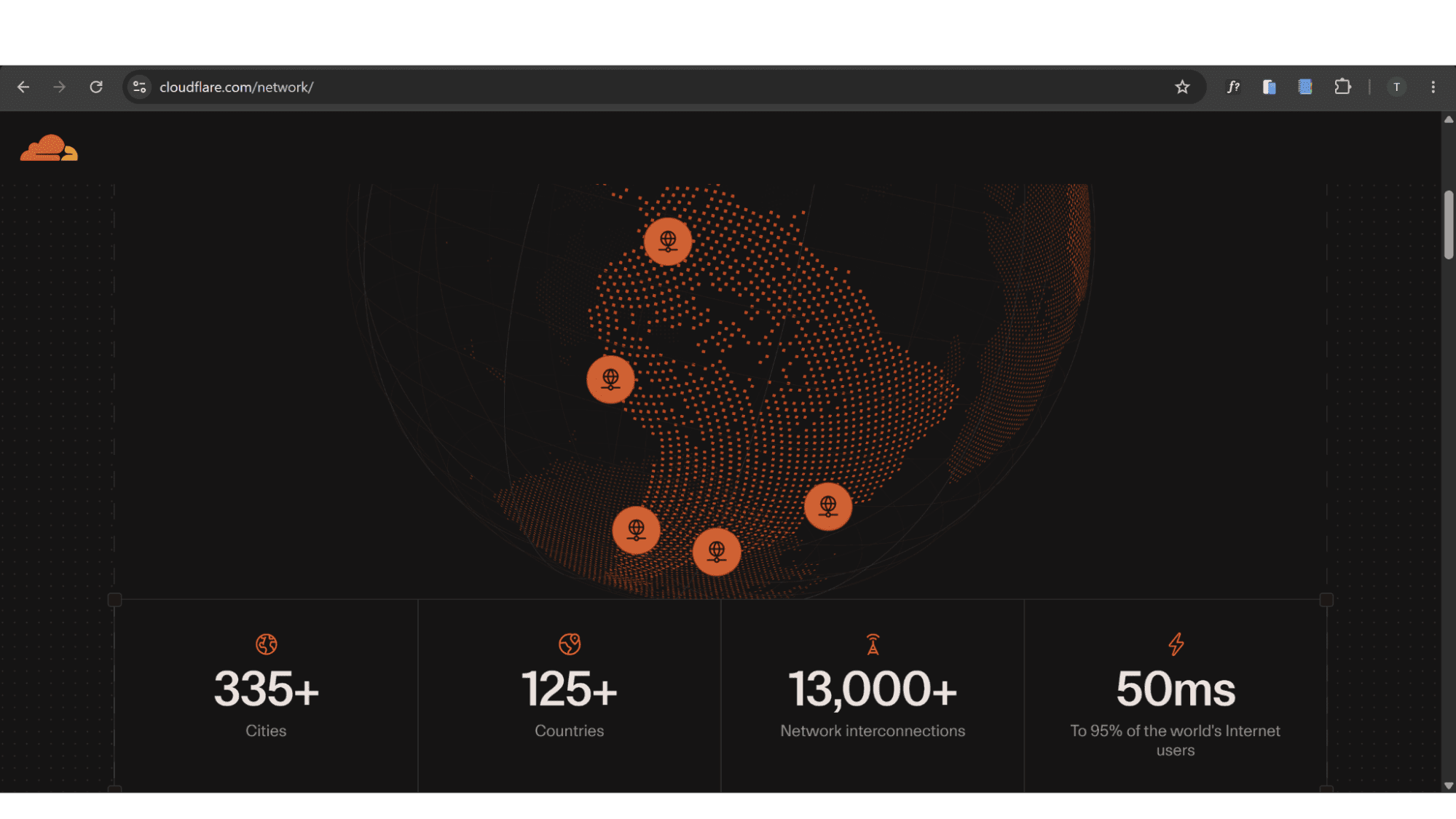
If you were to ask IT professionals, no matter where they are from, to name just one CDN provider, most, if not all of them, would answer Cloudflare. This Californian CDN provider was created in 2009 by Matthew Prince, Lee Holloway, and Michelle Zatlyn - all Harvard Business School students at the time - and quickly grew into the CDN giant it is today, with 18 offices across 125 countries and 335 data centers online around the globe.
In my opinion, Cloudflare leads the pack when it comes to CDN providers, and they are the "default" choice for good reason. They have one of the largest networks, have great global performance, and one has to do very little configuration to get going. Cloudflare isn't just a CDN, but rather a "Security as a Service" platform. They stop DDoS attacks dead in their tracks through their web application firewall (WAF), which also detects and blocks malicious traffic patterns before they even reach your server. Even on their free plan they include unlimited bandwidth, a SSL certificate, and basic DDoS protection, which is perfect for anyone just starting out that has a strict budget to work with.
Cloudflare proudly boasts over 335 cities in its network, with more likely to be added soon, and if your target audience is based in the USA, Europe, or South America, you will see blistering-fast loading speeds. However, it is worth noting that the "Great Firewall" issue remains. Cloudflare has no physical presence in China, but they do partner with some local providers, but the performance is unfortunately not on par with high packet loss and latency.
Pros:
- Huge Network: As mentioned before, they operate in over 335 cities in 125 countries around the globe.
- Massive Scale: On average, they serve over 102 million HTTP requests per second, and proxy roughly 20% of the web's traffic at any given moment.
- Free Plan: They offer a free plan that includes unmetered DDoS protection, unlimited bandwidth, a universal SSL certificate, and global CDN reach.
- Range of Products: Besides CDN, they also offer workflow solutions, AI protection, and SaaS (software as a service) platforms amongst others.
- Argo Smart Routing: One of their best features if you ask me! How this works is that instead of just sending traffic to the nearest edge node, their AI finds the fastest route through the internet, which often improves loading times by up to 30%.
Cons:
- No Data Center in China: Because they don’t have a presence in China, loading times there are much slower and not as reliable.
- Advanced Features are Costly: Most of their plans are super-affordable, and some are even free, but as soon as you start needing their “Magic Transit” or “Trust / SASE security packages” it can get expensive.
2. AccuWebHosting
The Traditional Hosting King that Offer Surprisingly Good CDN

AccuWebHosting is a hosting provider that is probably more famous for its shared hosting, VPS, and dedicated server plans than for its CDN offering. However, what they offer in this regard is hard to beat! This hosting provider was founded in 2002 by Rahul Vaghasia and Jilesh Patadiya after they searched the internet for a hosting provider for their Windows-based website but couldn’t find one that offered what they needed, so they started their own company, which now forms part of the Vaghasia group of companies and has a solid and ever-growing client base of over 55000 customers.
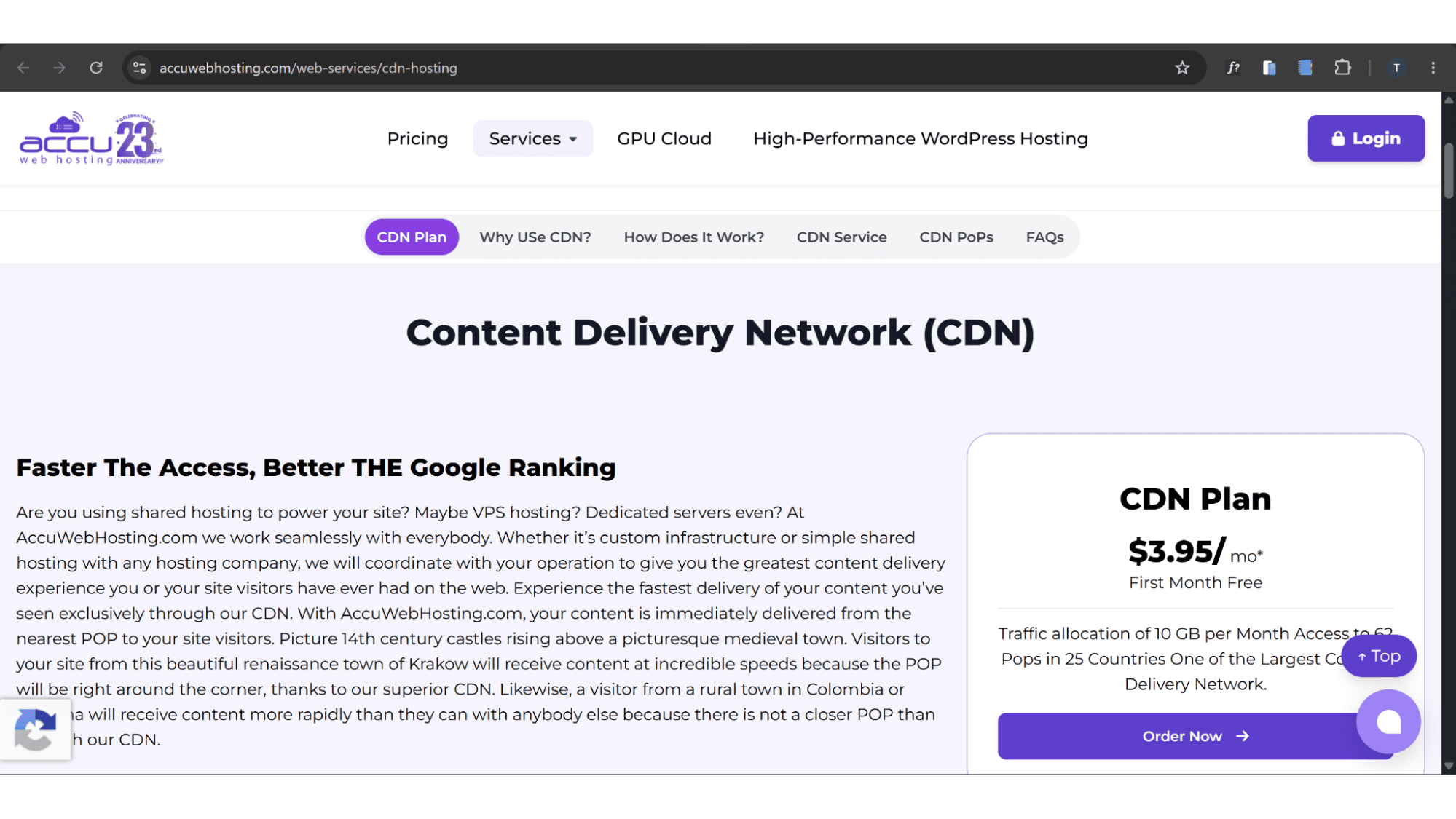
Few providers that are so prominent in the "traditional" hosting scene - and by this I mean shared, VPS, and so forth - also offer CDN as a service of their own. Many advertise it, but most just piggyback on known content delivery network providers or simply resell their services. AccuWebHosting is different in this regard, as they also offer their own. So, what makes them stand out, you might ask? Besides being really affordable, with some plans starting at just $3.95 per month, and super-reliable, they also offer a free IP address, even on shared hosting plans. Most CDNs will give you a shared IP, which is fine, until it isn't. If you are on a shared IP and another user who also shares that IP address gets their site banned in a specific country or region, or gets blacklisted, your site will be blocked too. But if you sign up with AccuWebHosting on a premium hosting plan, you will get a dedicated IP address and their CDN for free. Furthermore, their CDN comes with advanced DDoS attack protection, malware scanning, and has over 62 POPs (points of presence - in other words, data centers) in 25 countries around the globe.
Pros:
- Highly Affordable: You can get their CDN as well as a Dedicated IP without paying anything extra as long as you host with them.
- Wide Reach: Their network might not be as big as Cloudflare’s, but they still have over 62 data centers in 25 countries around the world.
- DDoS Protection: Their CDN offers protection against DDoS flooding attacks.
Cons:
- Slow Cache Purging At Times: Although I have never experienced this personally, there are complaints online that updating content takes longer than one would like sometimes.
- No Code, Just Caching: Unfortunately, you won’t be able to run your code on their edge servers as it is purely caching.
3. Fastly
The Programmer Friendly CDN Option
Fastly is the lesser-known CDN provider amongst these 3. They first opened their doors in 2011 and just like Cloudflare, is also based in California. Their platform is built on Varnish, which means it relies heavily on VCL (Varnish Configuration Language), and offers users lightning-fast content deliver, instant purging, and a highly configurable network that offers real-time configuration control, comprehensive APIs, stress-free rollbacks, and real-time logs, making them especially popular amongst developers.
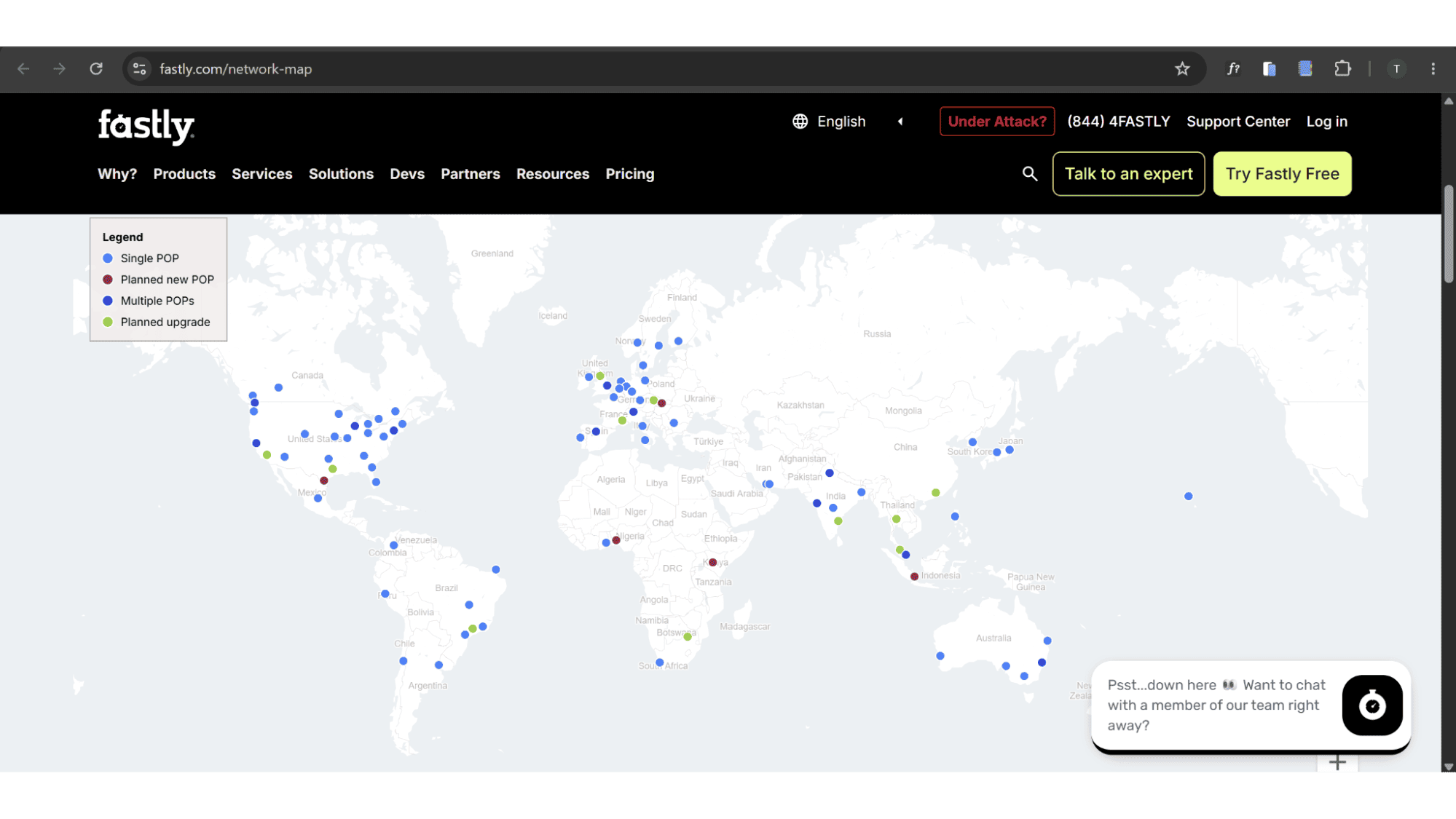
Fastly’s plans include solid security features such as DDoS attack protection, next-gen web application firewalls (WAF), and TLS encryption, and serve more than 5 trillion requests daily. They have over 72 POPS (points of presence) that cover North America, South America, Africa, Europe, and Asia.
Pros:
- Control: They offer a highly configurable network that offers developers real-time configuration control and a comprehensive range of APIs.
- Instant Purging: Their system offers users blazing-fast purging through Instant Purge. With this more content remains cached which improves performance, scale, as well as user experience.
- Instant Cache Invalidation: This is a critical feature for high-dynamic content websites.
- Great for APIs: Their CDN is excellent at handling API request surges.
Cons:
- Not For Newbies: Their system is more suited for seasoned IT professionals and developers, definitely not for beginners if you ask me.
- Slightly More Expensive: They also offer users a free tier, but as soon as you need to upgrade to a better plan the costs can balloon quickly.
- Smaller Network Than Some: Their network is decent, but not nearly comparable to Cloudflare for example.
Frequently Asked Questions (FAQ)
1. If I use a CDN, will it slow down my website in some regions?
This is not true as a CDN would actually speed up your site rather than slowing it down. The first time a user in a new area visits your site, the CDN has to fetch the content from your origin server, which is called a “cache miss". So this might be slightly slower but now those files are cached on the local edge node, and loading times will then be faster.
2. What happens if the CDN goes down? Does my site go down too?
It is very unlikely, but it also depends on the setup. Cloudflare for example uses a reverse proxy, so if a CDN has a global failure your site will go down. A Pull Zone CDN, such as the one AccuWebHosting will allow your site to still load directly from the server your website is on when the CDN goes down.
3. Can I use more than one CDN at the same time?
Yes, you can. It is a growing trend amongst bigger companies but can be quite expensive
4. Which CDN provider on this list is best for eCommerce websites?
- For stores with a lot of frequent inventory changes: I would say Fastly because you can instantly purge the cache for a specific product page.
- If you are using Magento, WooCommerce, or Shopify: Then I would say Cloudflare because of their excellent integration with "Cache Everything" rules and good security.
5. My target audience is in China. Which one of these are the best?
To be bluntly honest, not one of them. Cloudflare uses a partner, which is frustratingly slow more often than not, Fastly has no real on-the-ground presence there, and AccuWebHosting doesn't have a domestic ICP license in China.